Last year I conducted a series of video interviews featuring leaders in local and regional economic development. Unfortunately that process was interrupted for two reasons: audio-video quality capture issues such that I worried I couldn’t do justice to the time investment of the interviewees. Secondly, moving full time into developing the Ecosystem Navigator.
Now, with a video editor and producer on board to help, I’m resuscitating portions of the video interviews as a complement to the technology and development side of The Groundbreakers. One of our first orders of business: make further use of last year’s interview footage.
In this short six minute video, five regional economic development leaders discuss what makes their region unique. Focusing on regional advantage, at the macro level, is straightforward enough. But, to me at least, how these points of difference are made is fascinating: specific, practical and strategic.
Matthew Slotwinski is the CEO of the Sarnia-Lambton Economic Partnership.
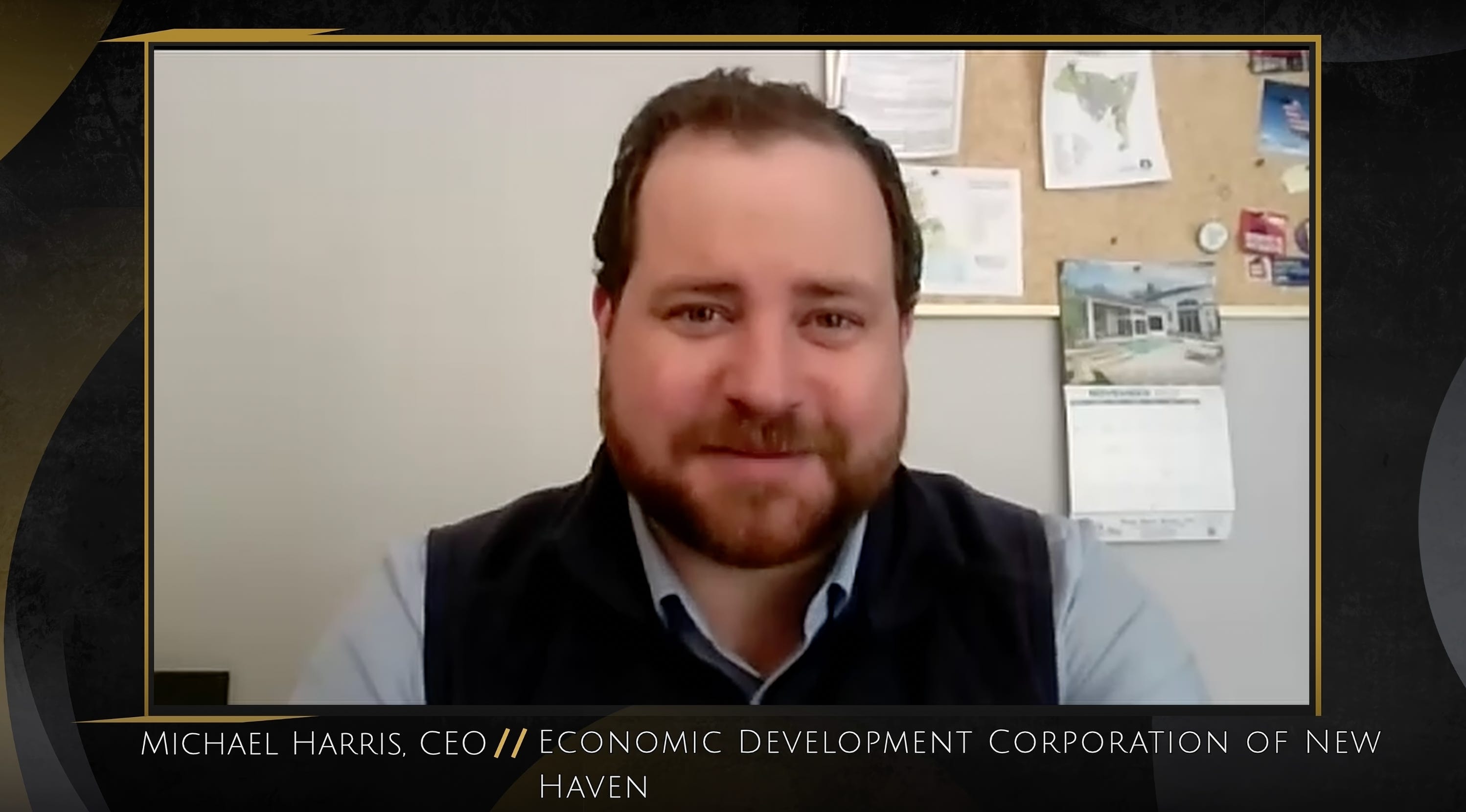
Michael Harris is the CEO of the Economic Development Corporation of New Haven.
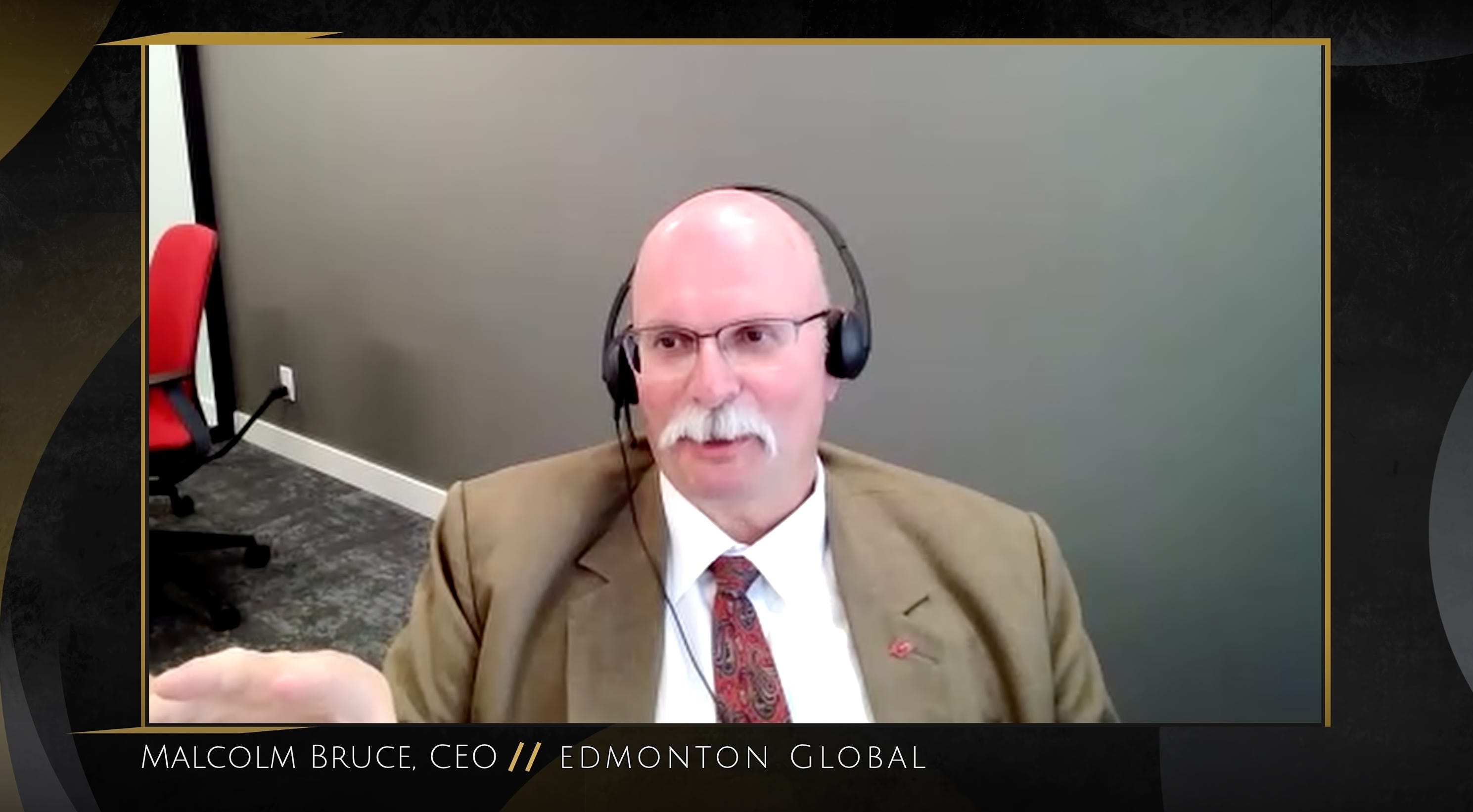
Malcolm Bruce was the CEO of Edmonton Global.
Michelle Simms is the CEO of Advantage St. John’s.
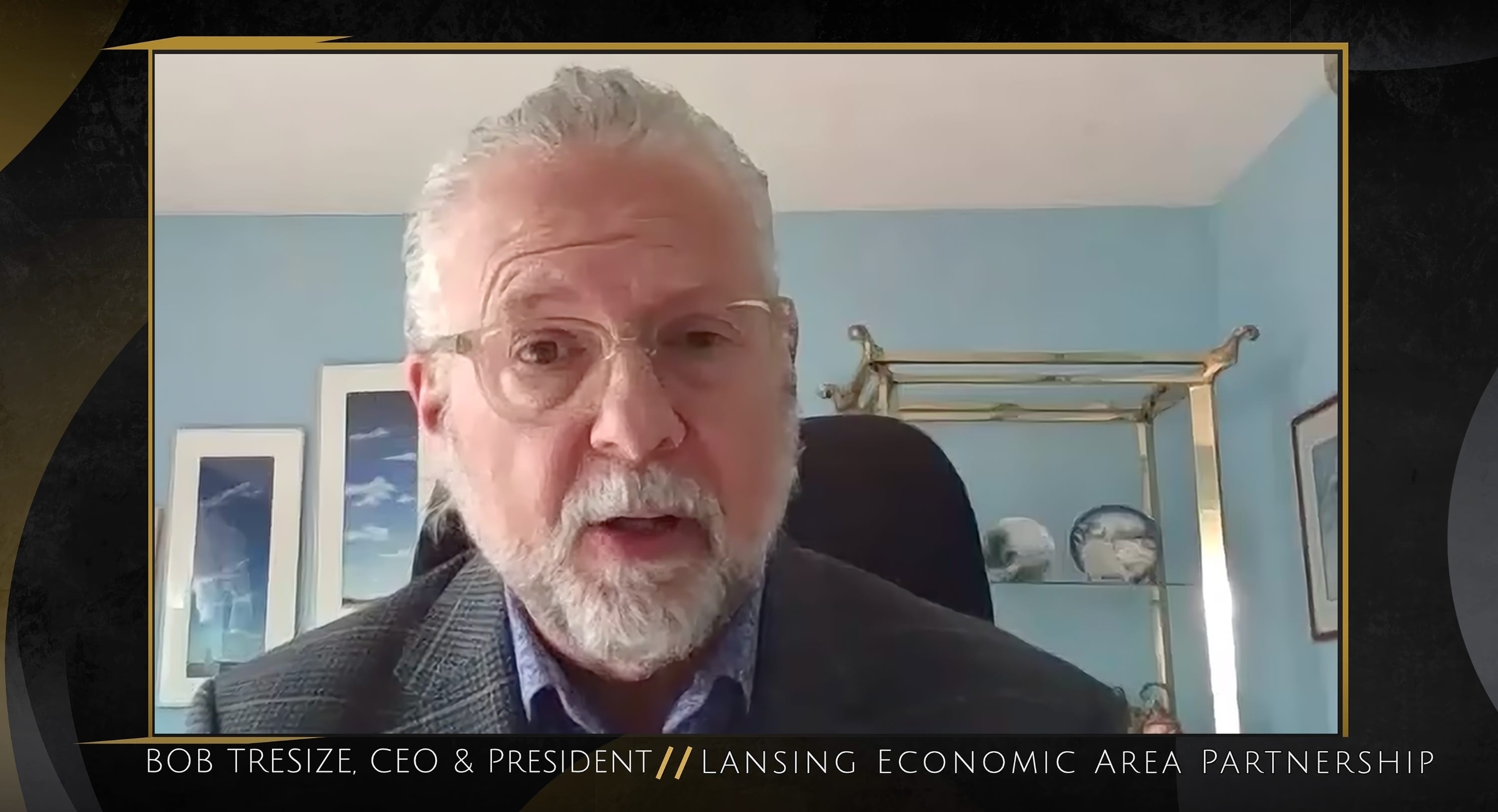
Bob Tresize is the CEO & President of Lansing Economic Area Partnership.
What ties these regions together is how deliberately they connect their local and regional assets into a continuous virtuous innovation cycle, focused on increasing the flow of regional knowledge, talent and capital. Some key takeaways:
Combine inherited strengths with new research: Pair legacy refining, offshore engineering, or toolmaking with university labs to create industries competitors cannot easily replicate.
Erase municipal and institutional silos: Pool municipal mandates and align college curricula directly with commercialization pipelines.
Keep value circulating locally: Use housing affordability, workforce ladders, and recycled exit wealth so local growth funds the next generation of founders.
About Sarnia Lambton Economic Partnership
Most regions chasing the clean economy try to build from scratch. In Sarnia-Lambton, Matthew Slotwinski and the Sarnia-Lambton Economic Partnership are proving that an industrial heartland can move faster by upgrading the heavy infrastructure it already owns.
Few communities hold a physical network like this: three of Ontario’s four refineries, the Dawn natural gas hub, and a chemical valley where one plant’s co-product pipes directly in as a neighbour’s feedstock. Surrounding farmland supplies corn stover and wheat straw, while a new oversized load corridor links local metal fabricators unobstructed to deep-water shipping on Lake Huron.
What turns heavy plumbing into an innovation pipeline is how local institutions share the steering wheel. Through the Innovation Bridge, the Economic Partnership, top-ranked research institution Lambton College, and the Western Sarnia-Lambton Research Park share boards and project pipelines. That coordination lets companies like Origin Materials prove a bio-concept at the college, pilot at Canada’s largest clean-tech incubator, and scale on an existing industrial brownfield site while local apprenticeship networks train the skilled trades.
By feeding agricultural waste into traditional refining value chains, Sarnia-Lambton is steadily transforming petrochemical dominance into Canada’s premier hybrid chemistry and clean hydrogen hub.

About Economic Development Corporation of New Haven.
When a New Haven biotech firm like Halda Therapeutics lands a $3 billion acquisition, the traditional economic development playbook celebrates the exit. For Michael Harris at the Economic Development Corporation of New Haven, the real work is making sure a city of 134,000 turns those breakthroughs into neighborhood prosperity.
New Haven’s scientific density is extraordinary: the nation’s second-highest concentration of NIH funding, Yale’s quantum hardware labs, and Connecticut’s first $50.5 million Innovation Cluster Award. Yet the city pairs downtown wet labs and quantum testbeds with shared commercial kitchens, a 900-member makerspace, and a century-scale transformation of one of America’s busiest train stations.
Local institutions deliberately wire those assets together so residents can climb every rung of the ladder. While Yale and UConn collaborate through Quantum CT, Southern Connecticut State University and Gateway Community College run BioPath, training 3,000 students annually on industry equipment and placing public high schoolers in a dedicated classroom inside downtown BioLabs alongside commercial startups.
By placing quantum computing directly beside drug-discovery platforms while investing in housing and cultural entrepreneurs, New Haven is proving that a frontier innovation hub can also be an engine for inclusive local mobility.
About Edmonton Global
International site selectors do not care about municipal boundaries; they care about critical mass. That blunt truth led 14 municipalities to form Edmonton Global, and as CEO Malcolm Bruce explains, pooling their strengths has already unlocked over $5 billion in new investment.
No single municipality held the whole puzzle. Surrounding counties house Canada’s largest petrochemical complex, massive fabrication yards, carbon-capture geology, and an international airport positioned on the shortest circumpolar and Pacific routes to Asia. The urban core supplies the brainpower: eight post-secondary institutions graduating 30,000 students a year, anchored by the University of Alberta’s Turing Award-winning AI pioneers and stem-cell researchers. Because builders built over 18,000 homes last year, keeping average prices near $400,000, 85% of those graduates stay.
By acting as one unified region, local leaders combine industrial fabrication with academic research. That is how an energy capital unexpectedly captured $500 million in life sciences, building Canada’s first large-scale antiviral and vaccine fill-finish facility alongside multibillion-dollar net-zero hydrogen projects.
About Advantage St. John’s
Operating in the harsh waters of the North Atlantic requires engineering that few places on earth can match. As Michelle Simms of Advantage St. John’s explains, solving extreme offshore oil and marine challenges over three decades gave the region the technical foundation to build a globally competitive innovation economy.
Today, that specialized know-how sits alongside a strategic eastern seaboard location, a 97% clean hydroelectric grid, and deep talent pipelines from Memorial University and the College of the North Atlantic. Rather than competing off the side of their desks, three municipalities formed Advantage St. John’s and convened 40 partners, from the port and airport to university incubators, around a single regional strategy.
Crucially, local actors keep wealth circulating at home. When financial-crime pioneer Verafin—born in Memorial’s Genesis incubator—was acquired by Nasdaq for $2.75 billion USD, employee stock ownership turned local staff into angel investors, while a $1 million gift to Genesis now hands new startups $25,000 checks on arrival. That reinvestment loop is propelling the St. John’s metro from resource reliance into a $1 billion-plus venture hub spanning ocean tech, software, and aerospace and defence.

About Lansing Economic Area Partnership
Google co-founder Larry Page grew up in greater Lansing, and for Bob Tresize of the Lansing Economic Area Partnership (LEAP), the mission is making sure the next Larry Page never has to leave. Across three counties and half a million people, Lansing is wiring frontier research directly into a century-old manufacturing base.
Few mid-sized regions hold this mix of assets: Michigan State University’s top-ranked nuclear physics program and Facility for Rare Isotope Beams, two major health systems, America’s second-ranked technical community college, and deep-soil farmland just fifteen minutes from downtown.
LEAP’s 80 public and private partners connect those assets with early-stage capital through the MSU Foundation’s Conquer Accelerator and Red Cedar Ventures, alongside the state-backed Trek Small Business Hub. Crucially, they treat childcare, affordable housing, and arts—even funding a city Poet Laureate—as core economic infrastructure that sparks unexpected collaborations.
By pairing nuclear physicists and clinicians with skilled toolmakers who can physically build the product, Lansing is transforming from a traditional auto town into a homegrown MedTech, AgTech, and particle-accelerator powerhouse.