For myself, I always write about Dublin, because if I can get to the heart of Dublin I can get to the heart of all the cities of the world. In the particular is contained the universal.
-James Joyce
A century later, Joyce’s elegant turn of phrase stands the test of time, charged with new meaning and importance. Today, the particulars of every town and city in the world – what makes each place special, important, and attractive to live in – are at once threatened and afforded game-changing opportunity by universal forces.
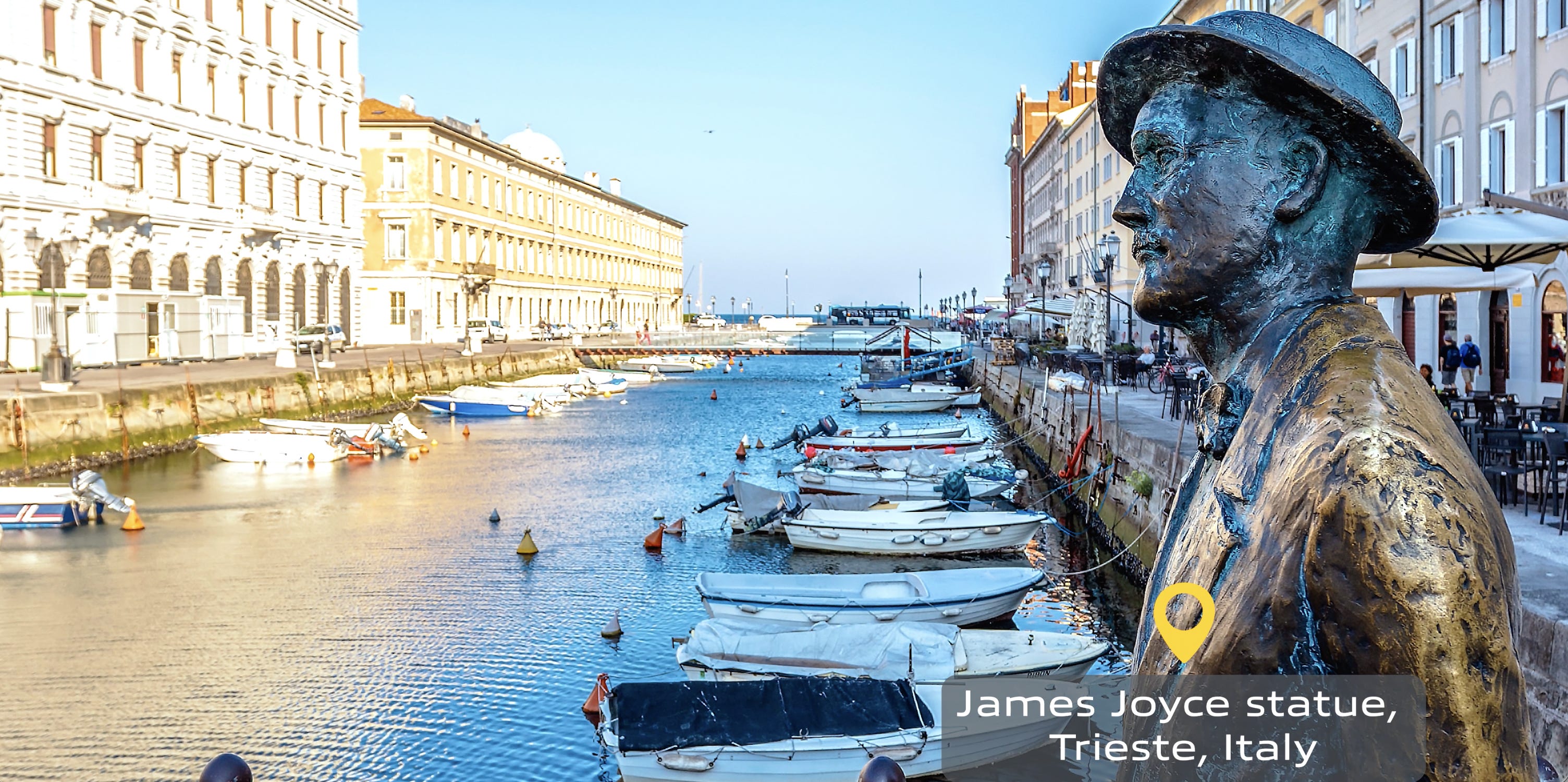
In the particular is contained the universal
To understand why this passage holds such deep relevance for cities and regions across the globe, Dublin is an ideal place to begin. The moment we see something particular to the city, two things are likely to happen. Your mind transports you there. You gain a fleeting feeling of what it might be like to follow the River Liffey along the city’s streets or visit the home of Guinness. You connect with the place on an emotional level, and it’s the particulars of this historic seaside city that do so.
Which is where the second thing is likely to occur. You think of home and the similarities and differences; your world and perspective shifts just a little. But it’s likely not the Ha’penny Bridge or St. Patrick’s Cathedral that really gets you thinking, it’s your emotional response to what you’ve seen. This is where the particulars of a place, its people, the built environment expressing their culture, beliefs and priorities link us directly to the universal. We recognize the signals of hope, freedom, happiness, the heart and will to succeed, the desire for belongingness. Our common humanity is on full display despite our many differences.
The roots of each place’s particular nature are fed by universal human needs and behaviours. For ourselves, our families, friends, and community we want to provide safety, security, health, happiness, purpose and meaning. We see it in people’s unrelenting drive for progress, to make things better.

Universal forces with local effect
We also see it manifest in competition. Between businesses local and global, between cities, countries and political blocks, competition inevitably produces wins and losses, gains, setbacks, and course corrections. At a time of massively increasing socioeconomic transformation and uncertainty, cities and towns – indeed, entire countries – must change their game completely or fall behind, facing the severe consequences of lost potential when talented people leave or never arrive.
The result is an overriding imperative: the need for local progress. Artificial intelligence is transforming everything at a rate that’s only accelerating and the infrastructure supporting it is nothing short of jaw-dropping. xAI’s merger with SpaceX presages orbital AI data centers powered by limitless solar energy. Nvidia is building a Physical AI tech stack, gearing up for a humanoid robot and labor automation they estimate will eventually become a $40 trillion to $50 trillion total addressable market. Mark Andreessen of a16z sees immense opportunity: “productivity gains (driven by AI) should increase demand for labor, because labor becomes more valuable… humans are free to tackle even more ambitious frontiers than ever before.”
For places around the globe, existential questions immediately surface. What sort of labour? How do we attract it? What should we build? All this at a moment in time when slight advantages might transform into life-changing regional prosperity.
Universal forces with global consequences
The stakes are so significant that success at the local level extends to the geopolitical. The AI arms race between America and China, from raw silicon to frontier intelligence, will define our economic and political futures.
Researcher Leopold Aschenbrenner takes note of this in Situational Awareness: The Decade Ahead:
A complete rewrite of world economies supercharged by AGI super-intelligences would be able to compress the R&D effort human researchers would have done in the next century into years. Imagine if the technological progress of the 20th century were compressed into less than a decade. We would have gone from flying being thought a mirage, to airplanes, to a man on the moon and ICBMs in a matter of years. This is what I expect the 2030s to look like across science and technology. An industrial and economic explosion. Extremely accelerated technological progress, combined with the ability to automate all human labor, could dramatically accelerate economic growth. The changes we could be facing might be more comparable to the historical step-change from very slow pre-industrial to the seismic changes brought about by the industrial revolution.
Resolving the paradox of change making things the same
The universal forces we’re subject to, from the economic to the geopolitical, create challenges particular to every place, be it Lethbridge, Tacoma or Montevideo. Every place pursues strategies to preserve and grow the specifics that make it unique, delivering progress and economic resilience as part of building quality of life. Every place needs hope.
This creates something of a paradox. Openness, transparency, competitiveness and freedom of movement create incentives for cities to emulate what works elsewhere, speeding and flattening and eroding by increments what makes each place distinct in the first place. The more we model other places, the less unique we become.
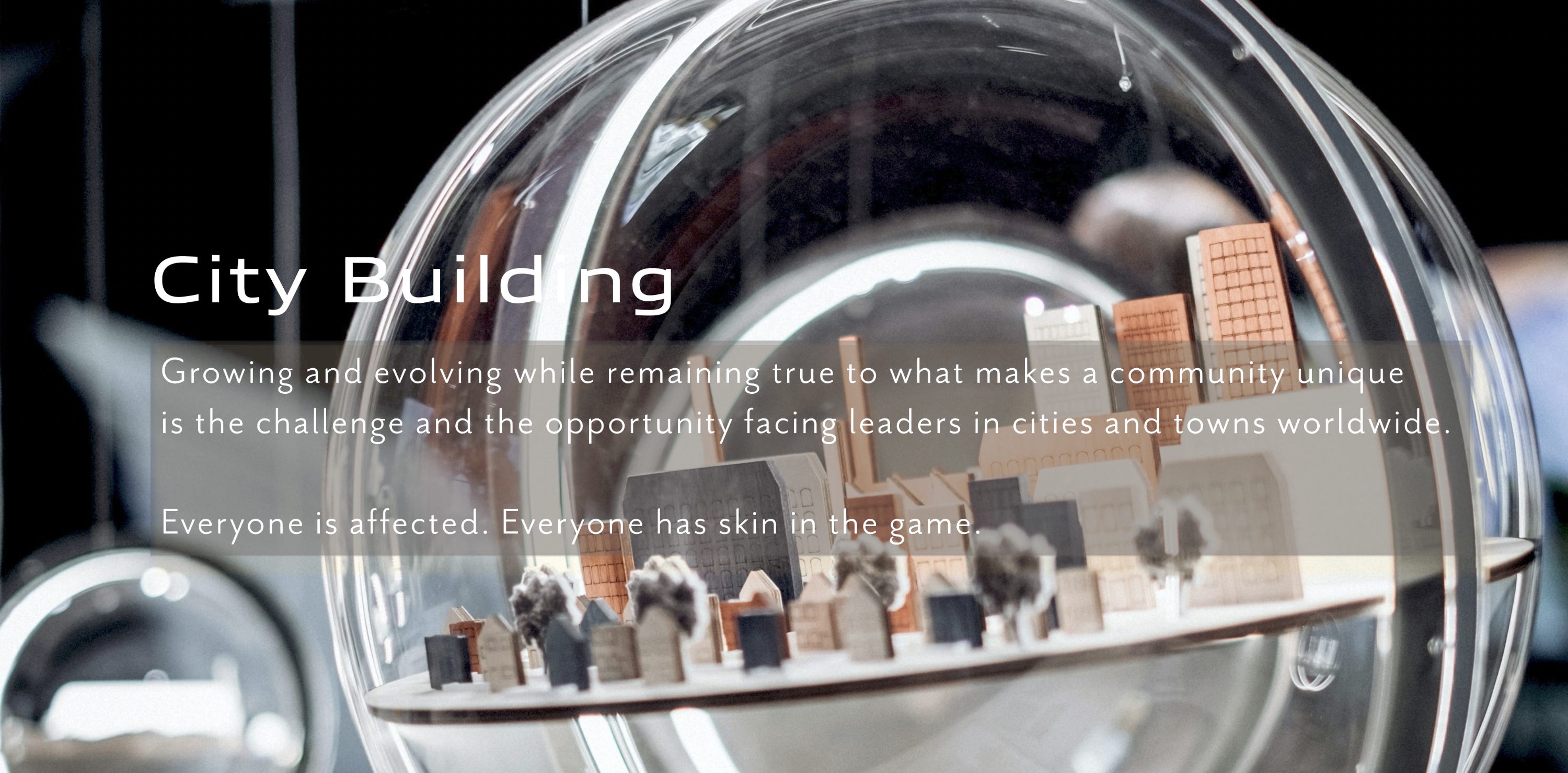
Resolving the paradox — growing and evolving while remaining true to what makes a community unique — is the challenge and the opportunity facing leaders in cities, towns and regions worldwide. Community builders, elected officials, entrepreneurs, economic development groups, academic institutions, the private sector: everyone is affected and everyone has skin in the game.
Local differentiation flows from the mechanics of knowledge
It’s an extremely complicated challenge. City building ranks among the most complex of human behaviours and that’s true whether we’re talking about São Paulo or Sioux Falls. In this context, universals like “hope” or “progress” or “competition” are far too abstract. The path forward lies in the particulars and objectives we can influence and manage. And if there is a single detail, a strategic building block with which to begin, it is knowledge.
At first, “knowledge” also seems too broad or abstract a place to begin. Without the right sort of knowledge nothing works. Hospitals can’t operate. Universities are shuttered. Policing declines. Instability undermines the universals that bind us together and other, darker universals begin to prevail. But that is to make the point. If it’s true that knowledge is the most fundamental of building blocks and it is also true that the world is changing around us at breakneck speed, and it is further true that local leaders must create the conditions for their own community to thrive both now and into the future, then preserving, creating and transferring knowledge is seismically important.
Not just any knowledge. We can’t boil the ocean, we can’t be all things to all people. Harvard’s Michael Porter says about strategy “The worst mistake in strategy … is to compete with your competitors on the same thing. You want to find a different kind of value that you can deliver to a different set of customers. Strategy is fundamentally about how you’re going to deliver unique value.”
Knowledge: the DNA of Local Prosperity
Your local economy is infused with its own distinct character and advantage, its own particular knowledge bases. Given the incredible pace and complexity of the modern world, the more local business, academic and government leaders collaborate and invest in that specialized knowledge, the greater the chances that difference-making innovations will grow existing businesses, spark new ones, and have the knock-on effect of attracting talented people while encouraging local talent to stay. Quality of life improves, progress is made, hope strengthens.
The DNA of this system is knowledge. It is impossible to overstate — in an AI-powered, 24/7, global, interconnected world — the importance of preserving, growing and attracting as much local knowledge as possible in areas of current and plausible future strength.
Inside Knowledge.
Economists, led by groups like Harvard’s Growth Lab, explain that knowledge has three elements. The first is embodied knowledge. Think tools like hammers, MRI machines, or electron microscopes. The second is codified knowledge found in books, algorithms, and online. Tacit knowledge, often referred to as know-how, is the third. It’s the practical capacity to do things, built through years of imitation, repetition, trial, and error.
One way to think about the stickiness and complexity of transferring know-how is to envision training a robot to walk. You need to impart in code the concept and physics of walking — factoring in motion, balance, terrain, mass and environment — to a machine entirely dependent upon your instructions. Apply the same challenge to construction, like building a bridge. You might be very smart, you might be of an engineering mindset and a naturally skilled builder. You might be able to procure all the materials you need, you might be able to find plans for bridge building. Without the right know-how you may never bridge the gap.
The know-how principle applies across the board, from AI research to gaming, emergency medical services, retailing, agriculture, and every advanced scientific field in existence. It takes battalions of incredibly talented, highly specialized people working in close coordination to tackle today’s astonishingly complex challenges. Those skilled people need capital, infrastructure and talented colleagues with complementary skills to develop the know-how upon which local advantage is based.
Every place has deep reserves of know-how; every place has its comparative advantage. At a time of accelerating transformation and uncertainty, a relentless focus on feeding the virtuous innovation cycle of knowledge, discovery, growth, and reinvestment is the path to universal needs like quality of life, resilience and hope.
The result: diversification.
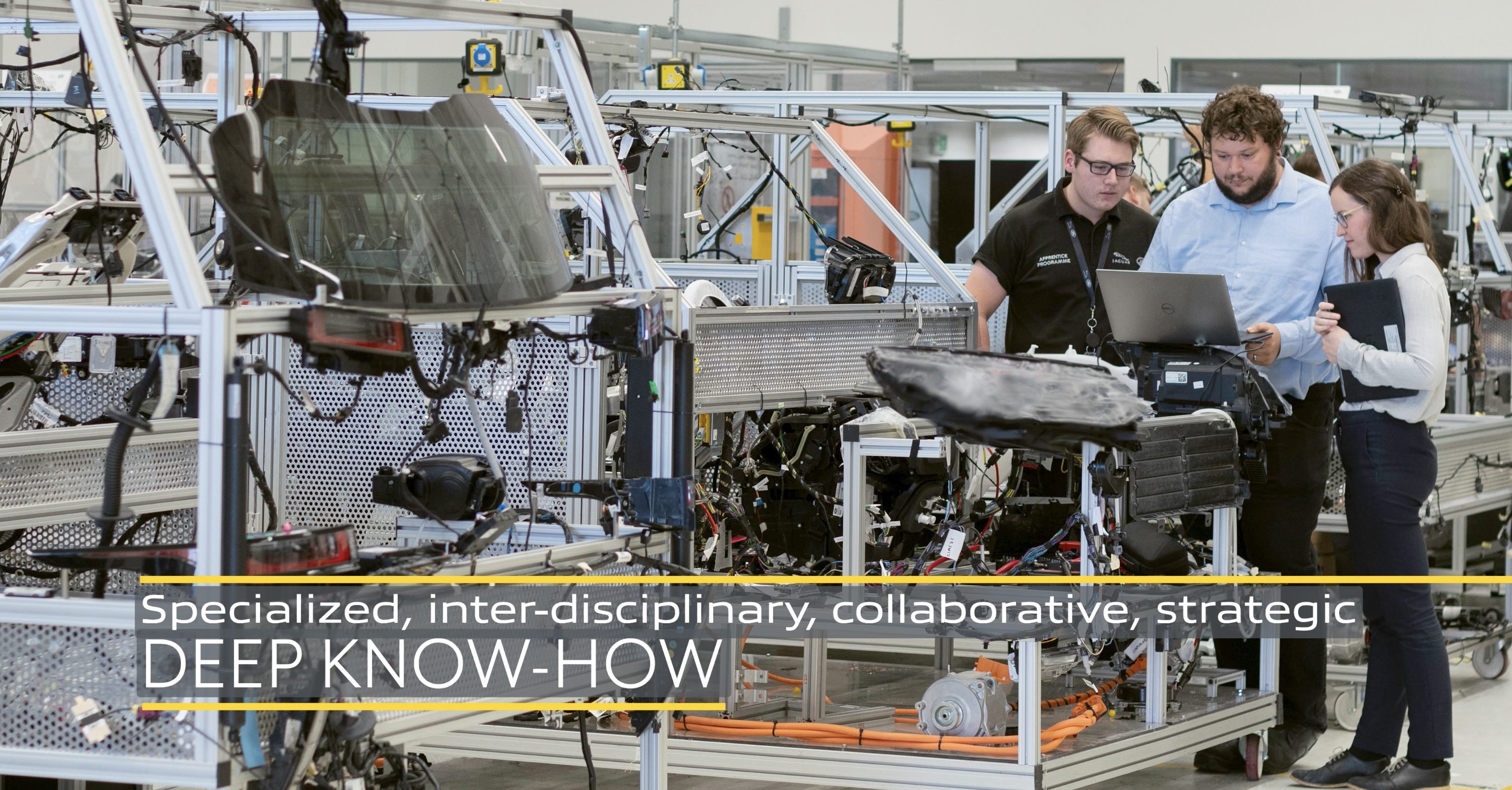
The more specialized people collide and combine, the more likely they are to push the boundaries of discovery – something economists call the extensive margin. More products and services are invented, launched, and made available worldwide. Economies, not just national but local, diversify. That economic diversity offers greater opportunity. It offers higher incomes, it increases quality of life and hope for citizens. Talented people, specialized in their field, stay. New talent, seeking similar opportunities, arrives. The inverse is also true. Skilled people, people with hard-won know-how, depart for greener pastures when opportunities to apply their abilities are lacking.
The virtuous innovation cycle: new know-how
When we think for a moment about Dublin, we immediately comprehend the extent of their local know-how. It is resident in the people and in the particulars they’ve created over decades if not hundreds of years. Local know-how is in part a product of factors like climate and geography, and in human ways that are harder to articulate but which we often bundle up and refer to as culture. When those particulars collide with external, universal sources of knowledge like your favourite LLM the opportunity exists to create something altogether unique: local, new know-how.
The translation of the abstract universal to the strategic particular opens pathways to new opportunities, opportunities that - with the right marketing know-how – might upshift right back from the particular and local to the universal and global, and all that portends for newfound competitive advantage, hope, progress and quality of life.
Success isn’t guaranteed
Preserving, growing and attracting knowledge is not easy. In fact, we can observe the damaging effects of income inequality as talent departs for places with massive infrastructure advantages. Silicon Valley is a gravitational force, drawing in the best and brightest from around the world. The outcome is that the region is an incredibly reliable source of innovation, new products and services, and high income. In Seoul, Hyundai Motor Group and Nvidia are in late-stage talks to establish a massive physical AI R&D hub in a project designed to drive innovations in autonomous driving, smart factories, and robotics.
The process of turning knowledge into productive capabilities, where specialized people work on increasingly complex challenges toward an ever-diversifying economy, is clearly a double-edged sword. Areas like Boston or London, armed with these advantages, more easily invent increasingly complex products and services. Those not as advanced stand to lose their talented people – that vital, local knowledge base – to faster-scaling centres of innovation. Every country in the world, every city and town, falls somewhere along this knowledge-infrastructure continuum.
This leads to existential questions for countries, cities and towns around the world. What is our role, where do we fit? Where do we begin?
Winning isn’t just a Silicon Valley game
Inspiring examples of places responding to the challenge are everywhere. At the Malawi University of Science and Technology, the university has built a laboratory complex and industrial park. They are pursuing game-changing projects in fields like agricultural technology, where specialized farming and agriculture knowhow is already present. Their pursuit of next-generation irrigation, planting, harvesting, food preservation, and commercialization inventions could accomplish extraordinary things: higher income, better quality of life — hope. They are building real economic opportunities for specialized professionals to translate local know-how into international opportunities.
The Virtuous Innovation Cycle
The beating heart of this entire system? Knowledge. The answer lies in developing a self-perpetuating cycle of local know-how, extending the productive capabilities of a particular place toward the universal objectives of hope, prosperity and quality of life.